
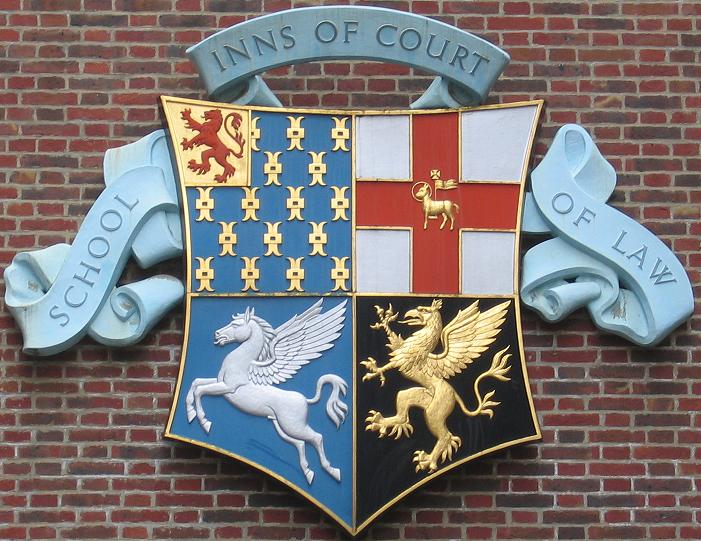
For many, including myself, the only way to fund the Bar course is to obtain a scholarship from one of the Inns of Court (Inner Temple, Middle Temple, Lincoln’s Inn and Gray’s Inn). The natural consequence of this is that the interview is a high-stakes game with interviewees’ dreams effectively on the line. Even a year down the line, I remember both my interview and the email offering my scholarship as vividly as the day they happened. Having been fortunate enough to receive the backing of Lincoln’s Inn (thank you Lincoln’s!), I wanted to share some advice on pitfalls to avoid so you can really let yourself shine.
1. You don’t know the outcome; don’t stress!
Flash back one year and I had definitely flunked my interview. I was so sure that I was not going to get the scholarship that I was looking into any options to fund my Bar course. Turns out, I was distraught and stressing myself for no reason whatsoever. It is so easy to get in your head about how the interview went, because the reality is that, everyone who goes to interview wants the scholarship so badly that errors are bound to be prevalent in interviews. The more you want something, the more likely you are to get nervous and make mistakes. So I think it is really important for interviewees to know that after your interview is done, even if you think it has gone badly, you shouldn’t beat yourself up. You may just get a named scholarship yet. It happened to me! Perspective is really important at this stage and, as with pupillage applications, there is always next year.
They are not looking for the finished product. They are looking for people who will in a few years time shine as barristers of the future. Nobody is perfect, just do the best you can.
2. Prepare for the known.
With Lincoln’s, you knew that at the end of the interview you would have to give a 5 minute talk on law reform on any area of your choice. Given that the rest of the interview is relatively unknown, I made sure that my topic and talk was practiced and refined. It is so easy to worry about what the panel might ask and then forget to spend adequate time preparing the ‘known’ bit. In preparing to give this mini-presentation, I would make a word document or a physical list and bullet point all of the points you want to make, for example:
- War on drugs has failed (show statistics backing this up);
- Increased spending v Decreased effectiveness;
- Prejudices created;
- Wide-spread social harm caused;
- The argument for decriminalisation.
Then set up a webcam and start recording yourself answering the question with reference to your bullet points only. I would not get used to using a script: it can sound robotic and it is good not to be so rigid in an interview scenario. Make 3-4 recordings of yourself answering the questions in each practice session. Then, really importantly, review the video (this is the part I never liked). When you are reviewing the video, really self-analyse. Do I sound genuine? Am I projecting as if I were in a court? Am I using filler words – mine was always ‘and’ at the start of my sentences!
Continue practicing and fleshing out your bullet points to the camera and eventually you’ll be so refined that when you inevitably get the question, you won’t be caught off guard. You’ll also have the confidence that you know how to answer this kind of question. Practice, practice, practice.
When you are presenting, remember, you are looking for a scholarship to become a barrister. Not a debater, BBC broadcaster, YouTuber, etc. You need to deliver your points, logically and accordingly, I would make it in a submission based manner. For example, I believe that X law should be repealed because of 1, 2 and 3. Then go through each point and sum up your key arguments very briefly at the end.
Lincoln’s Inn interviewees: For the law reform section, don’t just pick something easy. Use it as an opportunity to express a change you would genuinely desire to see in the legal system so the panel can better understand your motivations for coming to the Bar and the kind of barrister you would make.
3. Delivery & presentation are as important as your content.
There were certainly moments in the interview where I said something and then a few seconds later my brain caught up and thought, what did you just say? But in reality, you can’t let it get to you. Accordingly, no matter what you say, I would keep the following in mind:
- You’re not nervous, you’re excited. It sounds like something you tell a child with stage fright but hilariously, it actually worked for me. Anxiety and excitement, at least in my limited neurological knowledge, have similar nerve pathways so the two can often get mixed up. In the build up to the interview, tell yourself that you are excited to shine for the panel and show them what you are capable of and how hard you have worked for it (a bit of self-love never hurt anyone).
- Before you go to interview, do some breathing exercises and warm up your voice. Once again, sounds ridiculous. However, I did this religiously. I would either do this in the waiting room if it was empty or, more frequently, I would pop to the toilet and do them in there. Take some time on your own, take in big deep breathes and then close your lips together and hum at different pitches (start low and then go higher) to warm up/loosen your vocal chords. The same way a sprinter does dynamic stretching before running, is the same thing you are doing for your voice as a barrister.
- Your first sentence sets your confidence, really project that first sentence. This is always my ‘hack’ as an natural introvert. If you can be brave enough to really project your first sentence, you will feel your airway relax and nerves channelled toward performance.
- Look the part. This is such an easy way to get a win before you even go into the interview. In the week before, get a haircut, make sure your clothes still fit in a way which makes you feel confident and allow enough time to get ready on the day. Whatever makes you feel like your best self, get in done and be ready on interview day. It gives you such a big confidence boost when you feel you are looking your best and sets a good first impression with the panel.
4. Arrive 15-20 minutes early.
This is especially true if you are not from London like me. I had never been to the Inn prior to the interview and due to my own naivety, barely scraped the arrival time and ended up going into the room flustered (and more unfortunately, a bit sweaty). Don’t be like me, allow yourself additional time to find your way around London/Inn and be there early. You want time to re-read your application/CV, take some breaths and calm yourself down!
5. Know your application inside out.
If you have an interview which has had a paper sift (Lincoln’s/Gray’s), print out a copy of your application form and re-read it multiple times. Scribble on it and make it yours. You do not want to be tripped up by a surprise question about something you have written on it and then your mind goes blank in interview. I would go as far as to bring it with you when you go for interview, re-read it beforehand or as you are travelling to the Inn so it is fresh.
If your interview had no paper sift (Inner/Middle), print out a copy of your (hopefully up-to-date) CV and re-read it multiple times. Bring a copy and read it on your way to the Inn. It is quite incredible how blank your brain can go about your experience when there is a panel of barristers in front of you.
You need to know what is unique about your specific application and really sell yourself with evidence. Stay grounded and don’t stray into the theoretical. As I put above, you are interviewing because you want to become a barrister, nothing else. Long-winded waffle about how much more passionate you are than other candidates will get you nowhere. Give evidence for your claims, e.g., if you’re interested in a certain area of law then say why by reference to your real life experiences/studies rather than just talking about how ‘innately interesting’ it is.
6. Understand how to answer competency-based questions.
It is very likely you will get asked a competency-based question. These questions look a bit like this:
Please tell us about an occasion where you showed attention to detail.
Please tell us about an occasion where you showed resilience.
Please tell us about an occasion where you dealt with a difficult person, what did you do and how did it go?
First thing, as with the known part above, practice. Film yourself having a go at these kinds of question. It will let you get more comfortable with answering them.
Second, write the various competencies which a barrister might need in a circle on a page, resilience, attention to detail, dealing with difficult people, etc. Then, from the circle mind map outwards with all the evidence you have to support that trait from your education, work experience and life experience generally. Try to be as specific as possible. If you went to ULAW, you will likely know this as the ‘islands of awesomeness’. It is a great strategy for giving your brain a bank of things to say for various competencies.
7. Back yourself to the hilt.
Scholarship interviews are not the time to feel insecure about your experience and desires. Just go for it and have confidence in yourself no matter how badly it goes. The interview will be testing, but not unfair.
Final Thoughts
Even if your interview doesn’t go to plan, don’t worry. You never know. Go in prepared, get there early, and do your best.

 LouisAndTheLaw
Leave a comment