

It seems like yesterday, but it’s officially been one month since I have started my criminal pupillage…! So instead of celebrating, I thought I would write a post detailing what I have been up to. Hopefully, it gives others a brief insight into what the first six of a criminal pupillage is actually like. I hope that it also serves as a pertinent reminder to me of what I have done and learnt, as when you are actually “in it” on a day-to-day basis, it is hard to zoom out and reflect.
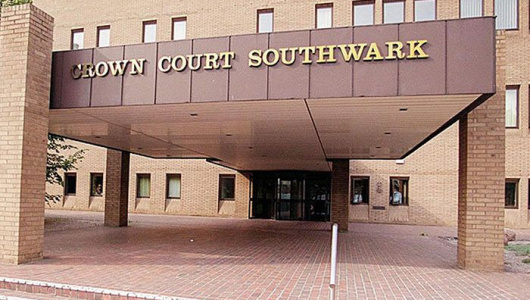
Unsurprisingly, I have been in court practically every day, which in itself is a massive learning curve – where to sit, when to speak, staff names, different judges, etc. While slightly daunting at first, all these things become very natural, and you settle into your new 9-5 home within no time. I was so pleasantly surprised with how unbelievably welcoming and friendly everyone at the criminal Bar is, particularly in Kent. There is always someone ready to lend you a hand, answer a phone call, or explain something to you. The collegiate atmosphere makes dealing with the often sensitive and distressing subject matter we deal with possible.
There is a lot of getting used to the court systems, most notably, the Crown Court Digital Case System – colloquially known as ‘DCS’. At first, everything is slightly confusing and you do not know where to look to find what you are looking for. Before long, you know exactly what you need to read on a case to get yourself up to speed.
Queues at a Crown Court, especially on a Monday morning, are enormous (usually as you have all the new jury panels arriving). Thankfully, the Bar Council issue Professional Access Passes to pupils so you don’t need to queue at security on arrival to court (yay) but unfortunately, this only applies if you have been called to the Bar. After all the mini-pupillages, it feels like a big step to have the queue jump privilege!
I have seen such a spectrum of different hearings already:
A lot of PTPHs (Plea and Trial Preparation Hearings).
These are the initial hearing in the Crown Court where the defendant is expected to enter their plea, and dates are set for disclosure of evidence prior to any trial. If a guilty plea is entered, the defendant may be sentenced then and there, although in reality, it is often adjourned for a separate sentencing hearing to allow the court to obtain further information about the offender and offending through a PSR (pre-sentence report) amongst other reasons.
First hearing in a murder.
While most cases are sent to the Crown Court for a PTPH, a murder case will have an additional hearing in the Crown Court pre-PTPH to deal with the added complexities that the hearing may bring and essentially, to ensure everything will be ready on time.
Application to vacate a guilty plea.
Once a guilty plea has been entered by a defendant, it cannot be freely withdrawn and needs to be the subject of an application to vacate the plea. Such an application is made in writing, under Criminal Procedural Rules 2020, r. 25.5.
Trials for a variety of offences:
- Controlling & Coercive Behaviour (2 days – adjourned);
- Rape of a Child under 13 (1 week – convicted on all counts);
- Sexual Assault (1 day – slotted in between other cases, only one day observed);
- Misconduct in Public Office (1 week – ongoing).
Sentences for a variety of offences:
- Robbery;
- Conspiracy to Burgle;
- Conspiracy to Steal;
- Human Trafficking;
- Bomb Hoax; and
- Possession with Intent to Supply a Class A Drug.
I have also had the opportunity to complete written work for my pupillage supervisor and other members of chambers, for example:
- Drafted a sentencing note: A sentencing note is something uploaded onto DCS by the prosecution setting out where they say the offence fits into the sentencing guidelines to assist the judge – in more complex cases the defence will often do this as well;
- Reviewed ABE interview edits of a rape complainant: ABE stands for ‘achieving best evidence’ and is essentially a video recorded interview, taken near the time of the offence, with the complainant. The interview can then be played in court nearer to the time, i.e., to preserve the evidence/account given closer to when the alleged offence occurred – this is particularly necessary in light of the delays in the CJS discussed below.
- Drafted a defence case statement (‘DS’): A DS is pretty self-explanatory, it sets out the nature/particulars of the defendant’s defence as well as outlining defence witnesses and what further evidence is being sought from the prosecution.
I’d perhaps underestimated that a massive part of the job is just people skills, i.e., being able to effectively build rapport and trust with people from all different backgrounds and walks of life. This does not just extend to defendants you may represent but also other counsel, solicitors, judges and all court staff – clerks, ushers, security and cafeteria workers. Following senior barristers day in, day out, you learn how to approach these interactions and importantly, how to adapt your language (both verbal and non-verbal) to the needs of whoever you are addressing. It is such an important skill, but not really one that can be taught, instead it is one you learn through exposure and practice. Being a good lawyer is obviously important but is completely useless without any ‘bedside manner’.
It has also been sobering to see the first-hand effect of the cuts to criminal legal aid and the general chronic underfunding of the criminal justice system. In one of my two ‘home’ courts in Kent, trials in the Crown Court for certain offences are being fixed going into mid-2029. It’s becoming commonplace to see witnesses giving live evidence from events which happened 5 years ago. For obvious reasons, that is far from ideal. Defendants have their lives in many ways on hold until the conclusion of their case. Complainants need to recall their often traumatic experiences years later which has issues both in terms of a) reliving the alleged offence and b) the accuracy of their recollection and ability to secure convictions on the back of that.
A further thing which is worth knowing about practising crime is that your diary is always subject to change. By way of example, you could have a trial with a time estimate of 3 weeks listed on 1st October. Prior to this, all the preparation will have been done, the trial in essence all ready to go and you rock up on the first day to find the defendant plead guilty – practitioners call this a ‘cracked trial’. Those next 3 weeks of work, are instantly free in the calendar and need to be filled with other work (of which there is an abundance). All other sorts of things can change the calendar too, the defendant might not be produced at court by the prison, the defendant/witnesses may be unwell, the CPS may need to take advice and wait for reviewing lawyers to give a decision… the list goes on. When the diary is empty, it is common to not know where you will be or what you will be dealing with until the night before, so adaptability and flexibility are crucial.
Whilst undertaking a criminal pupillage, you get the chance to see lots of different types of advocates with their own unique style. One thing I was told very early on is that you should never try and copy someone else’s style of advocacy. You can note what seems effective, as well as clever ways of putting things, but you need to find your own style and not pretend to be someone else. What works for one person will not work for another.
I hope this post gives a brief snapshot of what a month as a first-six criminal pupil actually looks like. I will be doing a short post like this for each month, so if you’re interested, certainly follow along.


 LouisAndTheLaw
Leave a comment